Heep Hong Society’s Expertise in Shaping Hong Kong International Airport’s First Sensory Corner

Discover how Heep Hong Society’s specialist team provided clinical input to support the Airport Authority Hong Kong behind the scenes.

HEEP HONG

Share this article

For many families, embarking on an overseas vacation brings excitement and anticipation. But for parents with children with autism, navigating an airport can be a recipe for sensory overload. The combination of large crowds, unpredictable sights and sounds, frequent announcements and security checks often creates overwhelming cognitive demands for neurodiverse travelers.

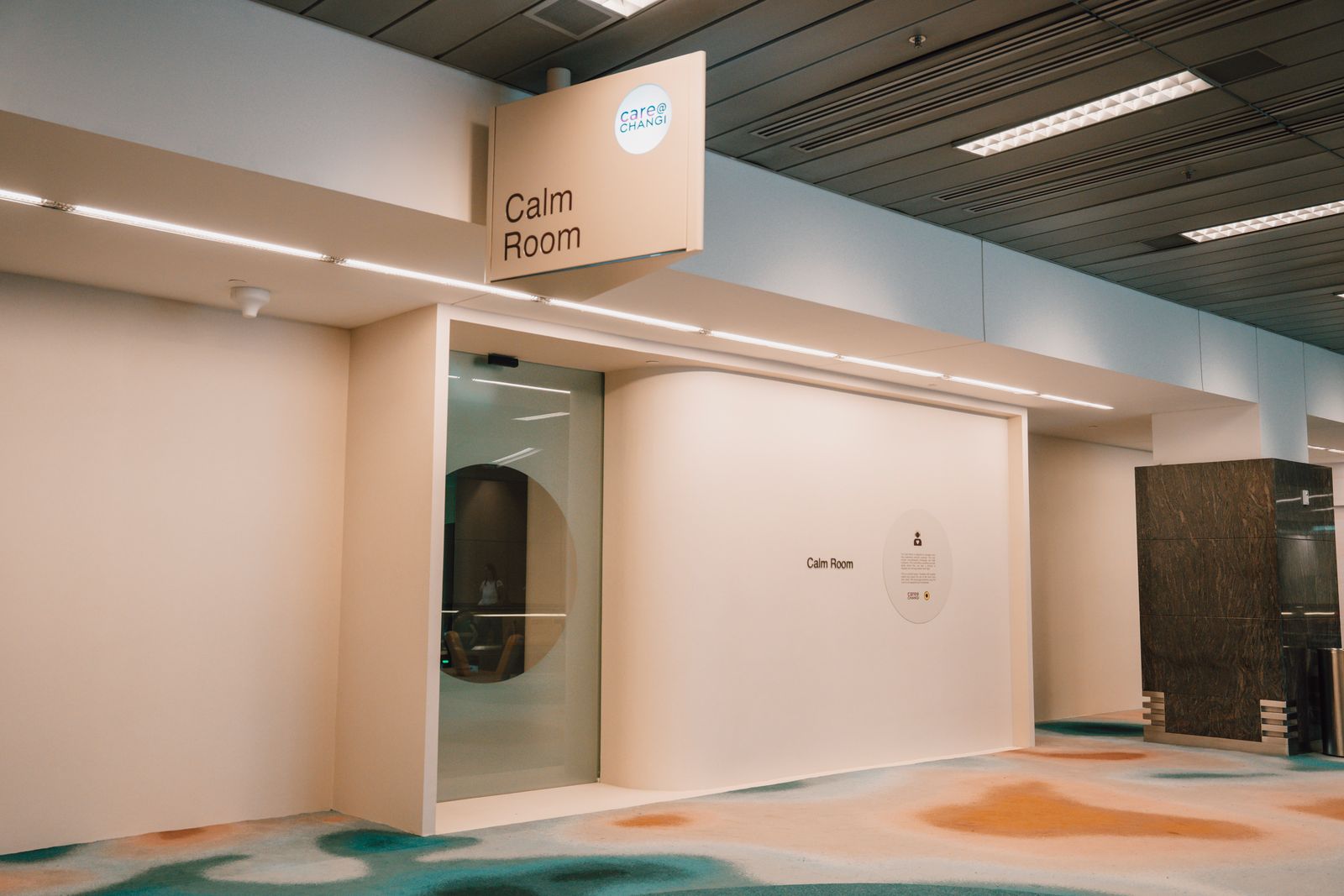
Recognizing these unique challenges, Airport Authority Hong Kong (AA) introduced their first-ever Sensory Corner at Hong Kong International Airport. Located in the restricted departures area of Terminal 1, this dedicated 30 sq.m. facility offers a quiet sanctuary designed to foster emotional regulation before flight departure.

To turn this vision into a clinically sound reality, AA partnered with Heep Hong Society, a leading local NGO specializing in autism support in Hong Kong, who served as the primary clinical consultants alongside the project architects. We spoke with Selina Tong, Head of Occupational Therapy Department at Heep Hong Society, to learn about the thoughtful design considerations and occupational therapy (OT) principles that went into crafting this inclusive space.
Supporting Neurodiverse Families at Hong Kong International Airport

Translating clinical OT practices into a high-transit, dynamic setting like Hong Kong Airport was both an exciting and meaningful milestone for Heep Hong. “The principles of occupational therapy focus on the intersection between the individual, the environment, and the activities they engage in,” explains Selina. “In addition to training sessions, we place great emphasis on collaboration with families to modify physical and social environments so individuals can better manage sensory, communication, and behavioral challenges.”

Airports present a complex sensory environment — handling millions of passengers with loud, unpredictable sounds, bright lighting, and long wait times. Selina remarks: “When providing recommendations for the Sensory Corner, we focused on creating a supportive space that could help reduce sensory overload, promote emotional regulation, and provide a sense of safety and predictability during the travel journey.”

A Sanctuary for Autism Families: Inside Hong Kong’s Sensory Corner

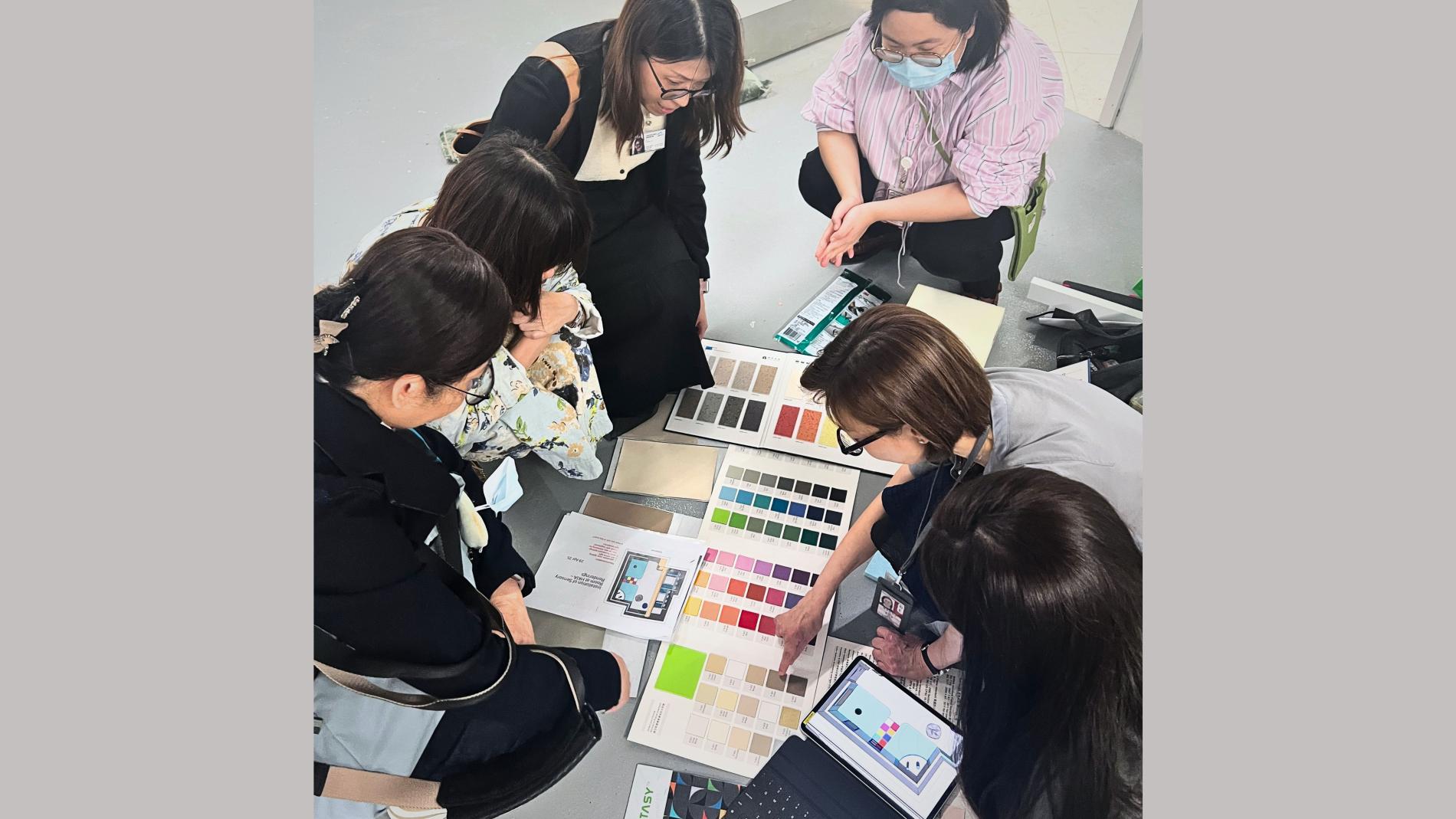
Before starting the formal design process, AA’s Passenger Experience team and the architect worked closely with Heep Hong to access the site and discuss key considerations drawing inspirations from Heep Hong’s existing facilities. Selina adds: 

With our professional input incorporated from the very beginning, this ensures that the room’s design was shaped by both practical experience and an understanding of the needs of its intended users.

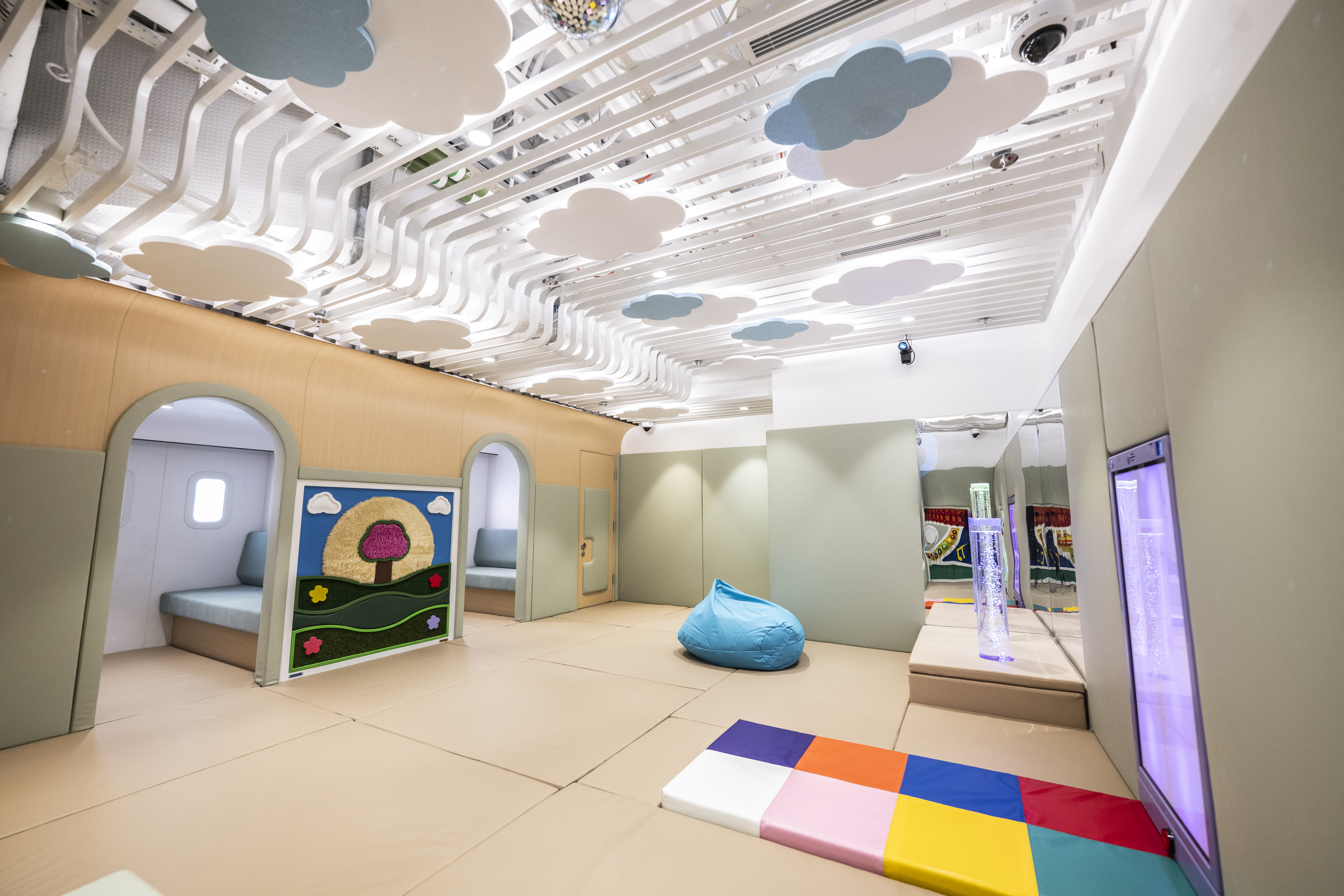
ASD is a wide spectrum with vastly different sensory profiles. While some children are sensory-seeking and need active movement, others are sensory-avoidant and require complete quiet. Balancing these contrasting needs within 30 sq.m. required a structured, two-zone design.

The Sky Explorium (Active Zone)
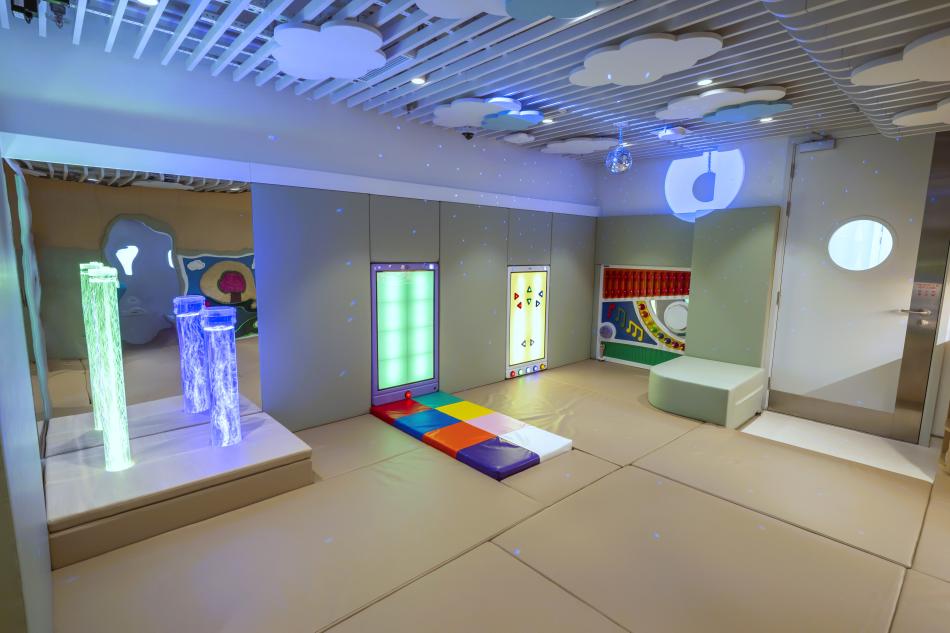
Equipped with tactile, visual, auditory, and proprioceptive features—such as bubble tubes, the Hip Hop activity panel, and the musical tactile panel—this zone supports active exploration. “For a child who seeks sensory stimulation, parents can guide them using the activity panels according to their individual needs,” Selina notes. “Smooth, gentle textures, a carefully chosen color scheme, soft lighting, and beanbag chairs help children self-regulate and recover from high alertness or tension.”

The Sky Cocoon (Quiet Zone)
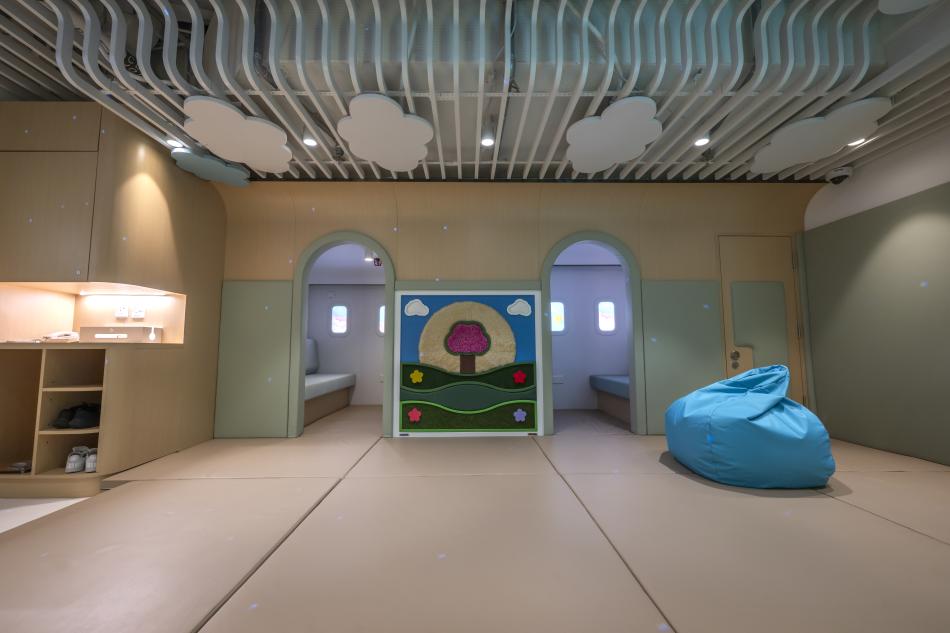
Featuring two cabin-like booths, this zone is built on the psychological principle of gradual desensitization. The booths simulate an aircraft’s cabin environment, complete with window views of daytime and nighttime skies. “Advance preparation can be extremely helpful for children with ASD or special educational needs (SEN),” Selina emphasizes. “Parents can sit with their child in the mock aircraft cabin to explain what to expect on the flight, helping them prepare mentally in a quiet storytelling environment.”

HKIA
HKIA
Hong Kong International Airport’s Sensory Corner, developed with specialized clinical input from occupational therapists at Heep Hong Society.

Ensuring Safety and Hygiene in Hong Kong’s Autism Sensory Corner

Safety protocols were integrated into the room’s blueprint from inception. Heep Hong provided clear specifications for the thickness of floor mats, the height of wall padding, rounded furniture edges, finger-pinch prevention on socket, and light switches positioned out of reach to prevent tampering. What’s more, materials were chosen to withstand rigorous cleaning schedules to maintain strict hygiene standards.

Prior to the official launch, Heep Hong invited local SEN families to participate in social adaptation activities in the Sensory Corner. “One parent shared that they had never felt confident about traveling due to long waits and unfamiliar routines,” recalls Selina. “Seeing their child relax in the quiet space gave them the confidence they needed to plan future family trips.”

Expert Pre-flight Tips for Neurodivergent Families in Hong Kong

To help families optimize their time at the airport, Selina offers some practical strategies for parents:

  • Follow Your Child’s Lead: Allow your child to explore the Sensory Corner freely, provided it is safe and does not disturb other users. “Parents do not need to instruct their child to engage with specific equipment — it is perfectly acceptable to let the child simply lie down and rest.”
  • Prepare for Departure: Dim the lights if your child is overstimulated, and give them ample warning time before leaving the facility. Use the quiet zone to gently rehearse flight expectations.
  • Start Preparation at Home: At least one week before traveling, discuss the journey such as offering information on the destination, what they may encounter at the airport, the boarding process, and appropriate behavior when traveling by air. This allows the child to develop a sense of preparedness. Pack familiar comfort items—such as quiet sensory toys, favorite snacks, and books — in your carry-on luggage to help your child adapt during the flight.

Designing Autism-Friendly Spaces in Hong Kong’s Travel Hubs

The introduction of Hong Kong Airport’s Sensory Corner sets a vital precedent for autism advocacy in Hong Kong and public planning across Asia. Public and private organizations are increasingly partnering with specialists for staff training on invisible disabilities and sensory support tools. 

“Looking ahead, we hope sensory-friendly design will become a standard consideration, rather than a special feature, across transport hubs, shopping malls, museums, and community spaces,” says Selina. By embedding inclusive design into public infrastructure, communities empower neurodiverse individuals to participate fully and confidently in everyday life.