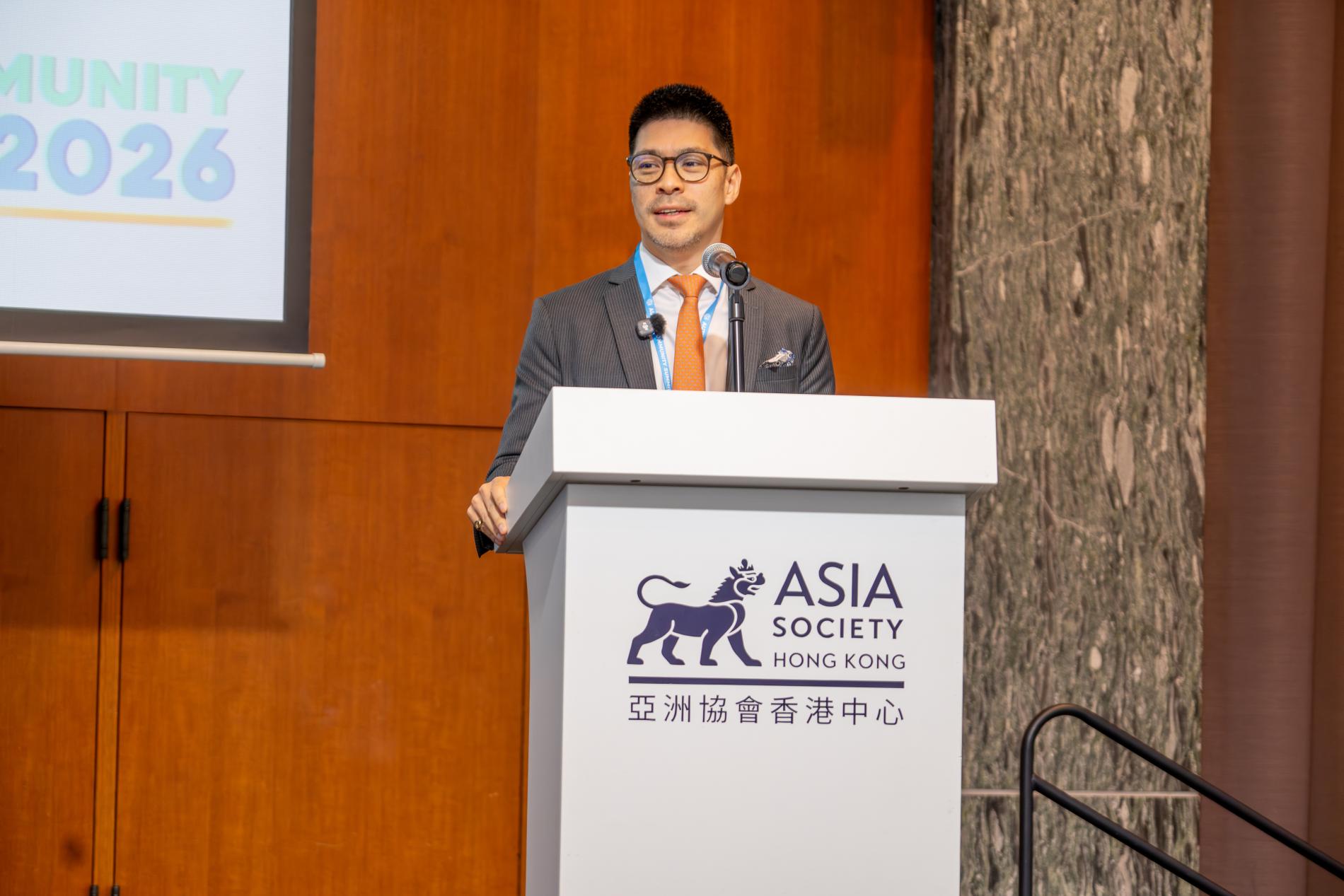
As regional chief information security officer for HSBC, Jonathan Lee was at the vanguard of protecting and developing the invisible infrastructure of digital trust that underpins global finance today. But for parents of neurodiverse children, he represents something that reaches beyond the boardroom: resilience and hope. The keynote speaker at the Autism Community Summit 2026, which was held in Hong Kong at the end of April, he reflected on a life shaped by late diagnoses – he was diagnosed with ADHD and then autism in his 30s – and on the idea that neurodiverse traits often misunderstood in childhood can become a person’s greatest superpowers in adulthood. Jonathan hasn't succeeded despite his autism; he succeeds because of it.
Spotlight
Resilience and Autism Advocacy: Jonathan Scott Lee’s Inspirational Story
Jonathan Scott Lee, diagnosed with ADHD and autism, turns challenges into strengths to inspire neurodiverse families across Hong Kong and Asia.

Share this article
Late Diagnoses That Unlocked Superpowers: Autism and ADHD in Adulthood
“There really is nothing special about me and I don’t have all the answers,” he says, charmingly humble and open from the first. “At first, I declined to speak at the summit as I was genuinely unsure what I had to offer. I’m content to share my testimony and recognise people are interested in my story, but I don’t have a magic bullet. The theme that has sewn it all together is to keep going no matter what – in other words, resilience.”
From Struggle to Success: Overcoming Rejections with Resilience
His story offers a refreshingly honest and grounded perspective on what it means to move through a world designed for “typical” brains and faces. Growing up in 1980s Birmingham, UK, with a Hong Kong father and a Malaysian mother, he initially attributed the difficulties fitting in to being Asian in the British heartlands rather than neurodiverse, of which, at the time, he was unaware. Academics didn’t come easy to him either.
“I failed my 11-plus and I got all Bs and Cs at GCSE and A-Level. I actually wanted to be a veterinary surgeon and applied to six vet schools and I was rejected by all of them,” he recalls. “I fell into clearing and the only place that accepted me was Royal Holloway [in London] to do a computer science degree. After that, when I was 22, I struggled to get a job. I applied to more than 15 graduate trainee schemes across banks and every single one of them said no. At that point, it would have been entirely reasonable to conclude I was not cut out for high-pressure environments, leadership, ambition.”
Discovering Cybersecurity as the Right Fit for a Neurodiverse Mind
It was only when he accidentally fell into an ethical hacking job, specialising in cybersecurity and working out of an attic space with a group of similar-minded men, that he discovered a place where the mechanics of his mind could truly thrive. He explains:
“I found I was good at my job and I really liked it because it suited the way my mind worked. For the first time, the environment matched the way my brain was wired rather than the other way around”
“Cybersecurity is intensely complex and technical. It is the one area of technology where you have to understand the entire stack of computing hardware, software, engineering, and the psychological layer of human interaction, requiring obsessive attention to detail, and it was an area I understood and was interested in.”
Championing Neurodiversity in Asia: Advocacy in the Workplace
From there, he came to the attention of the hitherto elusive world of banking, with Deutsche Bank offering him a job on its electronic trading desk – something Jonathan attributes modestly to being in the right place at the right time.
By 2021, now working for HSBC, he decided to share his autism diagnosis with a tight-knit group of HSBC’s executive leadership to help both himself and the bank to catalyse his contributions. At that time, neurodiversity was not yet a mainstream workplace conversation, so he inadvertently stepped into that space. He was met with genuine support, a response that grew from his openness, and he later became the bank’s first neurodiversity ambassador. Since then, he has spoken publicly about the value of hiring neurodiverse talent, an issue he believes Hong Kong, Asia, and Chinese culture more broadly have often been reluctant to address.
“I’ve worked to expand our talent pool of technology and cybersecurity talent and specifically target neurodiverse individuals from which there is a plethora of systems-thinking. I wanted to hire technical talent, so I was very public about the benefits of neurodiversity,” he explains.
Turning Loss into Advocacy: A Father’s Mission for Autism Awareness
However, Jonathan’s story is not only one of professional achievement but also of profound sadness, as he has walked the path that every parent fears most. Three years ago, he received an early morning phone call from the headteacher of his daughter Caitlyn’s boarding school in England saying she had taken her life. Caitlyn, 16, a gifted autistic young woman, was the eldest of Jonathan’s children, with whom he shared a close and special bond. The call, understandably, turned his world upside down.
While it would have been all too easy to give up, Jonathan made a conscious decision to keep going – which didn’t happen overnight but is a mindset he carries to this day.
Advocating for Mental Health Support in Neurodiverse Teens
Jonathan’s advocacy of the autistic community, which had begun before his daughter’s death, evolved and deepened by her passing. He says he was forced to consider the challenges and vulnerabilities associated with autism, not just its strengths, and that this gave him a fuller and more compassionate perspective. Still at HSBC, he is also a member of the Global Disability Council, and continues to lobby at British Parliament advocating for the distinct mental health pressures faced by neurodivergent children and teenagers.
Resilience as a Philosophy: Insights from Jonathan Lee
“If there is one lesson for me to impart, it is to develop resilience, and my definition of that is to do the best you can with each day that lies ahead,” he says. “It has become more poignant since Caitlyn died as she chose implicitly not to keep going and I will forever lovingly and respectfully disagree with her decision.”