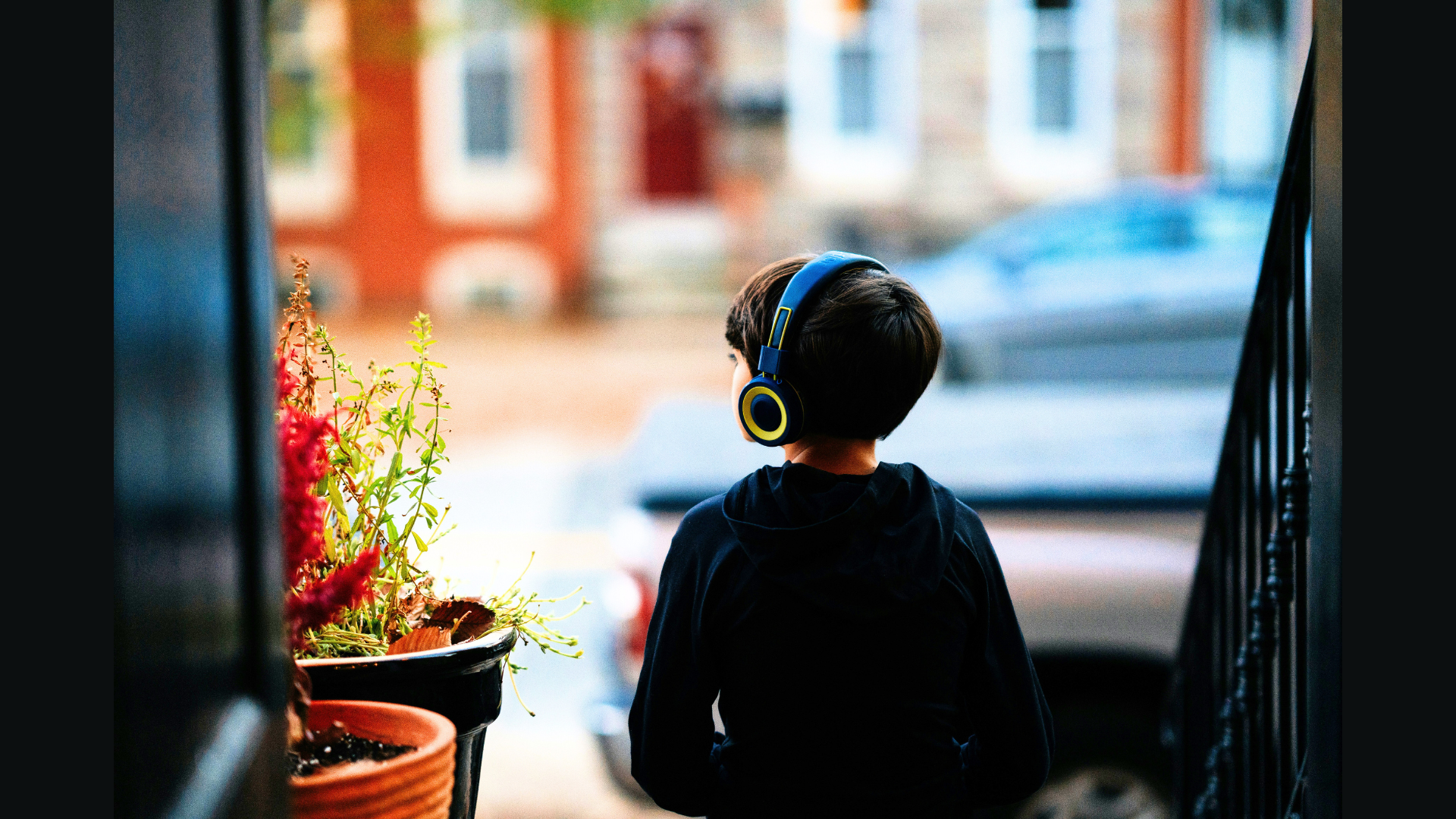
Families raising children with autism often face unique emotional and physical challenges, from navigating therapy schedules to providing round-the-clock care and behavioural management. These relentless demands can lead to stress, chronic fatigue, emotional strain and even family tension far exceeding those in families with typically developing children. Adopting effective stress management strategies is, therefore, essential to protect parental well-being, strengthen family bonds, and promote positive development for the child.
Therapy
Exploring How Expressive Arts Therapy Supports Families with Autism
Expressive arts therapy offers a creative approach to supporting children with autism and their families in navigating emotional and social challenges.
Share this article
The Role of Expressive Arts Therapy in Autism Support
One of the many avenues that families can explore for stress relief and meaningful self-expression is expressive arts therapy, a therapeutic approach that employs multiple creative art forms to help individuals access their own emotions, subsequently enriching emotional well-being and reducing stress.
Understanding Expressive Arts Therapy
Founded by three scholars in the US in the 1970s, expressive arts therapy - a subset of art therapy - draws on established psychological principles while emphasising an interdisciplinary approach to using the arts for healing. In practice, therapy activities can take many forms, such as crafting a mask that reveals hidden feelings, writing a short poem to reframe a challenging experience, and staging a role-play with one’s future self.
According to Professor Rainbow Ho, Director of the Master of Expressive Arts Therapy programme at the University of Hong Kong (HKU), the arts have historically been a vital healing resource across cultures and, since their integration into therapy, have played an important role in prevention, treatment and fostering emotional balance.
Yau Shing-mu, a registered expressive arts therapist who earned a degree from the HKU programme, points out that while expressive arts therapy is not a substitute for evidence-based interventions such as Applied Behaviour Analysis (ABA), it can serve as a complementary tool for individuals to engage with their emotions and ideas beyond the confines of words. In this regard, the approach can be especially helpful for children on the spectrum and their parents or caretakers.
He explains: “Many parents feel at a loss and struggle to understand their autistic children when they first notice repetitive behaviours or trouble staying focused. Because the child may have difficulty communicating verbally, the parents might take them to a doctor, psychologist or social worker, or they might come to us."
“Without making any assumptions, we try to explore their sensory sensitivities, look for patterns and observe the situations where they can express themselves more easily. We also talk with their parents about what they hope to achieve through therapy.”
Creativity and Imagination in Therapy
At the core of expressive arts therapy is imagination and creativity, which allow participants to explore and communicate emotions that are often inaccessible through verbal thought alone. In the process, new insights may emerge.
A former senior government official who served as Under Secretary for Transport and Housing between 2008 and 2017, Yau was himself on a quest to discover his own imagination and creativity when he decided to study the subject, which ultimately led to a career change in his early 60s.
“My past training and work were heavy on logical thinking. After retiring from the government, I wanted to explore my ‘other side’. I initially thought I wasn’t an imaginative person, but in fact everyone has imagination and creativity. Some of us just don’t have the chance to explore that side. Once I started studying expressive arts therapy, I discovered things about myself and gained fresh perspectives. It was an interesting journey,” he said.
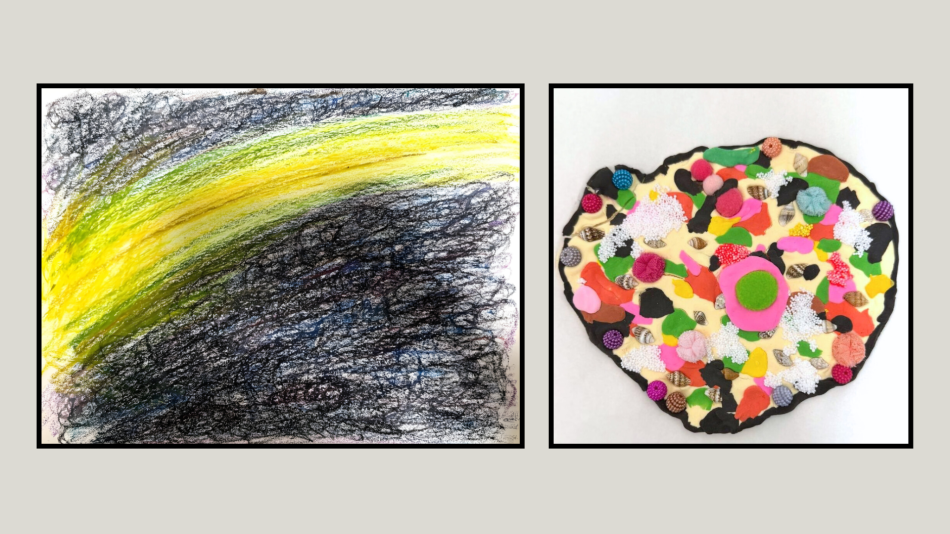
Expressive arts encourage creativity, support emotional expression, and offer therapeutic benefits for mental well-being.
How Expressive Arts Therapy Supports Autistic Children
For autistic children and their families, the journey of discovery made possible by expressive arts therapy could offer benefits in a variety of ways. According to Wynnee Yeung, an expressive arts therapist whose work supports individuals including children with special educational needs (SEN), non-verbal creative processes can foster participants’ confidence, self-expression and emotional regulation.
“In art therapy, there’s no right or wrong in the way you express yourself through the arts. If you are to create a drawing, it doesn’t matter whether it looks like the subject or not. In such a setting, SEN children feel they are not judged but are free to communicate their feelings. In the process, they may become more confident and improve their emotional regulation.”
“We’ve had parents whose kids have become calmer after therapy and don’t blow up as easily when dealing with upsetting situations,” Yeung explains.
In another case, a primary school boy with autism initially appeared nervous and shy. Noticing his strong sensitivity to music and keen observation skills, Yau encouraged him to play musical instruments and draw. The sensory experiences seemed to have a calming effect - after a few sessions, the child became more relaxed, began to smile and waved at Yau goodbye every time he finished. “In the end, he never spoke a word, but he found his own way to express himself,” Yau says.
How Parents Benefit from Expressive Arts Therapy
Parents could also gain new insights into their children by communicating with the therapist before and after therapy sessions. Yeung explains: “We wouldn’t go into every detail as there’s a certain level of confidentiality with the children to help them feel at ease, but we strive to help parents understand their children’s thoughts and needs from a new perspective by sharing our observations with them.”
Therapy sessions can be conducted one-on-one or in groups. Yeung notes that through shared creative activities, parents can strengthen the bond with their little ones. When multiple families participate, parents may also find support from one another and feel less lonely in supporting their autistic children.
Simple Ways to Try Expressive Arts Therapy at Home
Expressive arts therapy doesn’t always have to involve a professional therapist. Parents can also try simple, low-pressure activities at home with their little ones.
“Many things - even tearing a piece of paper - can be part of art,” Yau says. “How you tear it - the way you do it, the speed - all of that can be a creative process and a form of emotional release. It’s something one can easily try at home,” Yau says.